
A Complete Guide to Choosing the Right Business Entity in India
Starting a business is exciting, but one of the first and most crucial decisions every entrepreneur faces is:
“Which business structure should I choose?”
The choice of entity impacts:
- Liability of owners
- Tax obligations
- Compliance requirements
- Brand credibility
- Ease of fundraising and expansion
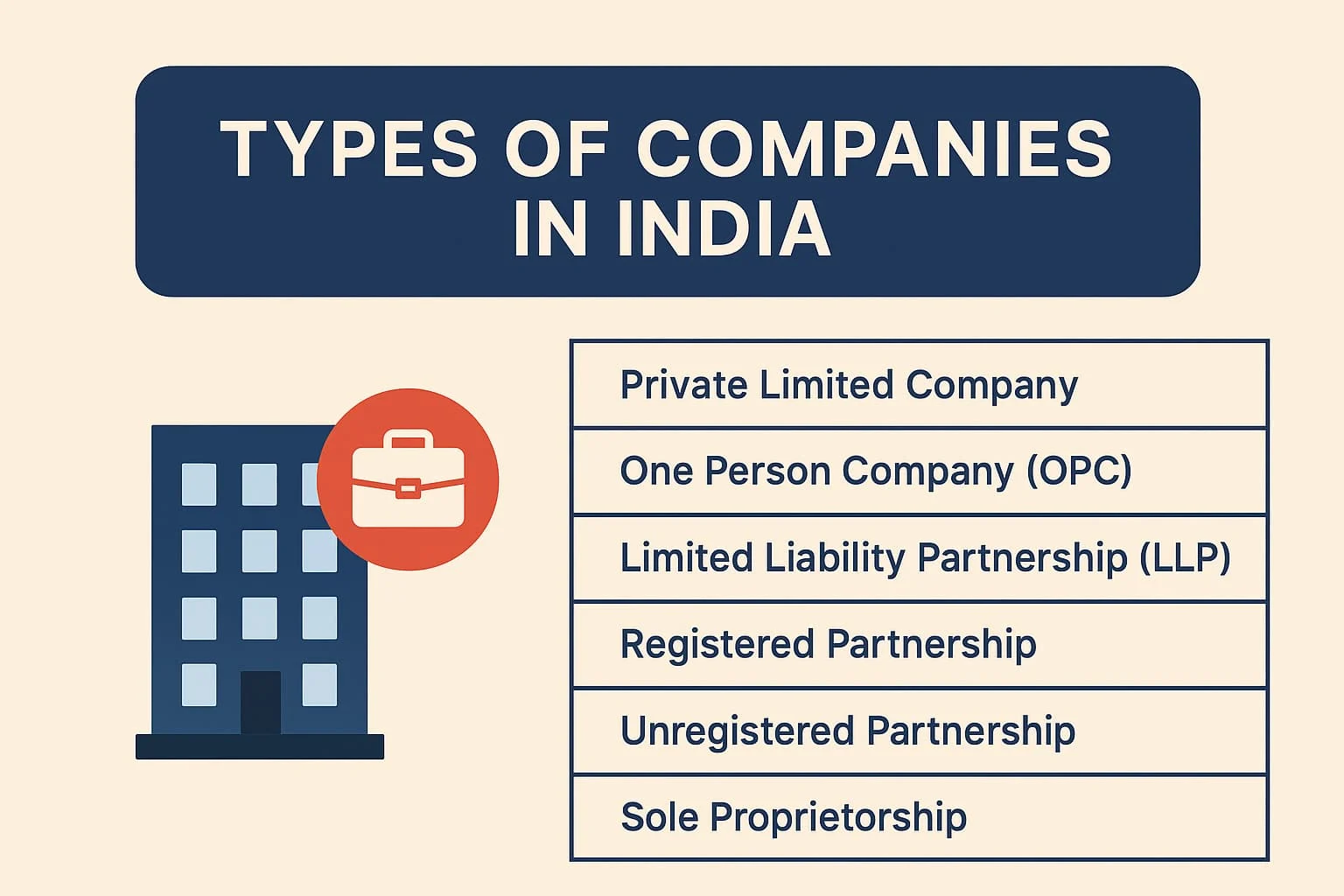
In India, the most common business structures are Private Limited Company (Pvt Ltd), One Person Company (OPC), Limited Liability Partnership (LLP), Registered Partnership, Unregistered Partnership, and Sole Proprietorship.
This blog will walk you through each type, along with comparisons, documents required, advantages, disadvantages, and FAQs.
1. Types of Business Entities in India
🔹 Private Limited Company (Pvt Ltd)
- Legal Status: Separate legal entity.
- Ownership: At least 2 shareholders & 2 directors, maximum 200 shareholders.
- Liability: Limited to shares held.
- Taxation: Flat 22% + cess.
- Best For: Startups, SMEs, companies seeking funding.
✅ Advantages:
- High brand credibility and trust.
- Easy to raise venture capital and FDI.
- Limited liability protection.
- Perpetual succession.
❌ Disadvantages:
- High compliance cost.
- Lengthy closure process.
- Restricted share transferability.
🔹 One Person Company (OPC)
- Legal Status: Separate legal entity.
- Ownership: Single entrepreneur with 1 shareholder and 1 nominee.
- Liability: Limited.
- Taxation: Flat 22% + cess.
- Best For: Solo entrepreneurs wanting corporate benefits.
✅ Advantages:
- Limited liability for the owner.
- Separate legal identity for business.
- Perpetual succession.
❌ Disadvantages:
- Cannot have more than 1 shareholder.
- Not suitable for high-scale expansion.
- High compliance compared to proprietorship.
🔹 Limited Liability Partnership (LLP)
- Legal Status: Separate legal entity.
- Ownership: Minimum 2 partners, no maximum limit.
- Liability: Limited to contribution.
- Taxation: 30% + cess.
- Best For: Professional firms, medium-size startups, consultants.
✅ Advantages:
- Limited liability.
- Easy transfer of ownership with agreement.
- Less compliance compared to Pvt Ltd.
- Credibility higher than proprietorship/partnership.
❌ Disadvantages:
- Higher taxation than Pvt Ltd.
- Cannot raise equity funding easily.
- Audit mandatory beyond certain limits.
🔹 Registered Partnership Firm
- Legal Status: Not a separate legal entity.
- Ownership: At least 2 partners, maximum 50.
- Liability: Unlimited.
- Taxation: 30%.
- Best For: Traditional businesses, family businesses.
✅ Advantages:
- Simple structure.
- Easy to form with a partnership deed.
- Low compliance compared to companies.
❌ Disadvantages:
- Partners personally liable for debts.
- Limited credibility.
- Difficult to raise outside capital.
🔹 Unregistered Partnership Firm
- Same as registered partnership but not registered with Registrar of Firms.
- No legal benefits of registration.
- Best for small local businesses operating on trust.
🔹 Sole Proprietorship
- Legal Status: Not a separate entity, business = owner.
- Ownership: Single person.
- Liability: Unlimited.
- Taxation: Individual tax slab.
- Best For: Freelancers, consultants, small traders.
✅ Advantages:
- Simple and inexpensive to start.
- No complex compliance.
- Complete control with the owner.
❌ Disadvantages:
- Unlimited personal liability.
- No perpetual succession.
- Very low credibility.
- No FDI allowed.
2. Comparison Table of Entities
| Feature | Pvt Ltd | OPC | LLP | Registered Partnership | Unregistered Partnership | Proprietorship |
|---|---|---|---|---|---|---|
| Legal Status | Separate entity | Separate entity | Separate entity | Not a separate entity | Not a separate entity | Not a separate entity |
| Members | 2-200 shareholders | 1 shareholder | 2+ partners | 2–50 partners | 2+ partners | 1 owner |
| Liability | Limited | Limited | Limited | Unlimited | Unlimited | Unlimited |
| Taxation | 22% + cess | 22% + cess | 30% + cess | 30% | 30% | Individual slab |
| FDI Allowed | Yes | With restrictions | No | No | No | No |
| Compliance | High | High | Moderate | Low | Very Low | Minimal |
| Suitable For | Startups, SMEs | Solo entrepreneurs | Professionals | Traditional businesses | Small businesses | Freelancers |
| Brand Credibility | High | Medium to High | High | Medium | Low | Very Low |
3. Documents You Get Upon Registration
(From your shared sheet ✅)
📌 Private Limited Company
- COI, PAN, TAN, MOA, AOA, DIN, DSC, Master Data, Share Certificates, Bank Proof
📌 One Person Company
- COI, PAN, TAN, MOA, AOA, DIN, DSC, Nominee Consent Form (INC-3), Share Certificate, Bank Proof
📌 LLP
- COI, PAN, TAN, LLP Agreement, DPINs, DSCs, Master Data, Bank Proof
📌 Registered Partnership
- Registered Partnership Deed, Registration Certificate, PAN, Bank Proof, GST (if applicable)
📌 Unregistered Partnership
- Partnership Deed, PAN, Bank Proof, GST (if applicable)
4. How to Choose the Right Business Entity?
Ask yourself:
- Do I want investors and funding opportunities? → Choose Pvt Ltd.
- Am I a solo entrepreneur? → Choose OPC or Proprietorship.
- Do I want low compliance with limited liability? → Choose LLP.
- Is my business traditional/local? → Choose Partnership or Proprietorship.
5. FAQs
Q1: Which business type is best for startups?
👉 Private Limited Company, as it allows fundraising, limited liability, and high credibility.
Q2: Which is the cheapest to start?
👉 Sole Proprietorship or Unregistered Partnership.
Q3: Which has the least compliance?
👉 Sole Proprietorship.
Q4: Can a foreigner invest in Proprietorship or Partnership?
👉 No. FDI is allowed only in Private Limited Companies (under automatic route).
✅ Conclusion
Your business structure defines your liability, taxation, compliance, and brand image.
- For scalable businesses and startups, go for a Private Limited Company.
- For solo entrepreneurs, consider OPC.
- For professionals and consultants, an LLP is an excellent choice.
- For small local businesses, Partnerships and Sole Proprietorships are cost-effective.
Choose wisely based on long-term vision, funding needs, and compliance readiness.